
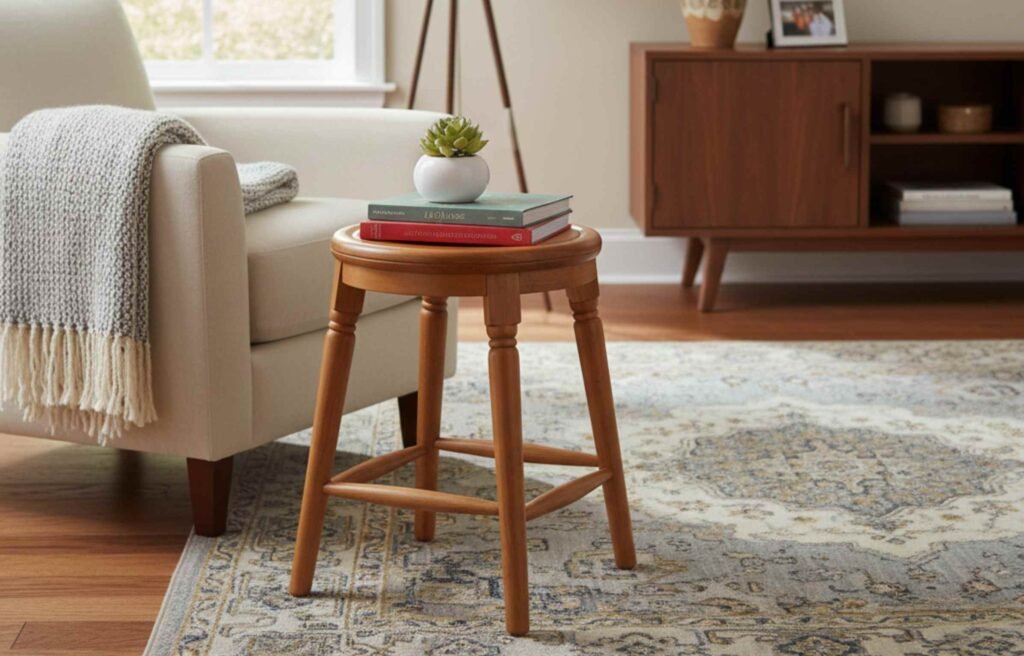
By the time the movers leave, and the bed settles into place, most bedrooms reveal a quiet imbalance. Something feels unfinished, though nothing obvious appears missing. The dresser stands firm. The nightstands perform their duty. Yet the room lacks a point of rest that does not ask for attention. A wooden stool for bedroom spaces is beginning to earn its place.
In many homes, the stool arrives last. It comes after the rug, after the lighting, after the art. It slips in quietly and changes how the room functions. Seating, surface, and a quiet pause are built into daily routines. Bedrooms benefit from these pauses more than any other room.
Designers often describe balance as symmetry or proportion. In lived-in bedrooms, balance feels closer to emotional steadiness.
The right piece calms movement and supports routine.
The Case for a Wooden Stool in Modern Bedrooms
Bedrooms carry weight that other rooms do not. They absorb fatigue and private rituals. Furniture works best here when it stays understated. A wooden stool for bedroom layouts succeeds by holding form without drawing attention.
Upholstered seating often dominates a room, while stools stay visually light. They do not stretch across walls or demand alignment. Their simplicity gives the room permission to breathe. Wood adds another layer of quiet strength. Grain patterns introduce subtle variation, offering interest without distraction.
Interior designers often reach for stools in projects that require restraint. In small bedrooms, stools replace bulky seating. In larger rooms, they anchor corners that otherwise drift into emptiness. A wooden stool placement can be easily adapted because it has no fixed role. It waits to be useful.
Material choice matters. Solid wood communicates permanence, even in small forms. It signals that the piece belongs, rather than fills. This sense of belonging supports balance better than ornament ever could.

Related – Side Tables for Living Room That Bring Character Into Your Space
Wooden Stool for Bedroom Corners That Feel Unfinished
Corners often reveal design uncertainty. Too small for furniture, too visible to ignore. Wooden stool corners resolve this tension without effort.
Placed near a window, a stool becomes a momentary seat. Paired with a folded throw, it suggests rest without staging it. Near a wardrobe, it supports daily transitions. These placements do not require explanation. They work.
Designers favour stools in transitional zones because they do not disrupt the flow. The human body instinctively understands how to use them. Sit. Stand. Move on. This rhythm restores balance in spaces that otherwise feel static.
Height also contributes to harmony. Stools sit lower than chairs, keeping sightlines clear. In bedrooms with low beds or platform frames, this proportional relationship matters. A wooden stool for bedroom use respects the scale of rest.
Eco‑friendly furniture is projected to grow at 8.6% annually through 2030, driven by greener home design choices (grandviewresearch).
When Simplicity Carries Authority
Furniture authority often arrives through weight and presence. In bedrooms, authority shows up through reliability. A stool proves itself through repetition. It holds a stack of books one day, a breakfast tray the next, and folded clothes every evening.
Wood tolerates this variability. Scratches soften rather than damage. Edges round with time. The piece ages with the room, reinforcing balance rather than eroding it. A wooden stool for the bedroom has longevity benefits from this quiet resilience.
Contrast plays a role here as well. Bedrooms dominated by fabric and soft finishes gain clarity from wood. The stool acts as a visual punctuation mark. It grounds the space.
Designers working in minimalist interiors often rely on stools for this reason. They offer contrast without complication. The result feels intentional, not sparse.
The Emotional Function of Small Furniture
Large furniture defines the layout. Small furniture defines experience. A wooden stool for bedroom spaces invites slower movement. It creates moments that slow the day.
Morning routines benefit from a place to pause. Evening routines benefit from a surface to unload. These micro-functions reduce friction. Over time, they shape how the room feels.
Balance in a bedroom often reflects how well it supports daily rhythms. When furniture anticipates needs rather than reacts to clutter, the space stays calm. A stool anticipates.
This anticipation matters in shared bedrooms as well. One person sits while another prepares. One person places belongings without claiming territory. The stool mediates quietly.
Wooden Stool for Bedroom Design That Ages Well
Trends shift quickly in home design. Bedrooms suffer when they chase novelty. The wooden stool avoids this trap by staying historically familiar.
From traditional homes to contemporary apartments, stools have remained useful. Their form changes subtly, but their purpose holds. A wooden stool for bedroom relevance persists across decades.
Designers advising long-term investments often recommend pieces that survive style changes. Stools qualify because they do not define the aesthetic. They support it.
Wood species influence tone. Light woods bring softness. Dark woods add gravity. Both work in bedrooms because the form stays humble. Balance emerges from restraint, not decoration.
Also read – Lounge Chair Malaysia Inspiration for Contemporary Living Spaces
Where Placement Creates Balance
Placement determines whether a stool disappears or performs. At the foot of the bed, it offers symmetry without weight. Along a wall, it becomes optional seating. Near a vanity, it supports function.
The key lies in avoiding overuse. One wooden stool for the bedroom balance often does more than several scattered pieces. Concentration strengthens presence.
Designers often test placement by removing other elements first. When the stool still feels necessary, it earns its position. This editing process keeps bedrooms from feeling crowded.
Negative space matters here. A stool surrounded by space reads intentional. Crammed against furniture, it loses authority. Balance requires breathing room.
The Craft Argument
Furniture built quickly rarely lasts, but a carefully made wooden stool moves at a different pace. Weight distribution matters. Surface finish matters.
Craft influences how the stool feels under use. Stable legs encourage confidence. Smooth edges invite touch. These sensory details contribute to emotional balance.
A wooden stool for bedroom use benefits from craftsmanship because it engages the body directly. Unlike decorative objects, it carries weight. Failure becomes obvious quickly. Quality prevents disruption.
Designers often prioritize materials that allow repair. Wood responds well to sanding and refinishing, helping bedrooms maintain calm over time.
Wooden Stool for Bedroom Spaces With Limited Square Footage
Small bedrooms magnify every decision. Oversized furniture overwhelms. Under-scaled pieces feel temporary. A wooden stool for the bedroom efficiency solves this problem through proportion.
Its compact form allows circulation. It supports multiple functions without expanding the footprint. In apartments, this flexibility matters.
Urban designers often specify stools instead of chairs in bedrooms under tight constraints. The stool provides seating without locking the room into one configuration. Balance stays dynamic.
Storage also benefits. Some stools tuck under consoles or desks. Others stack visually with shelves. The piece adapts to the room rather than competing with it.
A Note on Visual Calm
Visual calm comes from predictability. The eye relaxes when it understands structure. Stools support this by repeating simple geometry: circles, squares, and straight legs. Nothing fights attention.
A wooden stool for the bedroom avoids high-contrast finishes. Natural grain carries variation that feels organic. This variation reads as calm rather than noise.
Bedrooms filled with too many focal points feel restless. The stool remains supportive, not central. It strengthens the whole by staying modest.
Recommended read – Why Solid Teak Wood Dining Table Is 10X More Resilient
Choosing the Right Wooden Stool for Bedroom Use
Selection begins with honesty. How will the stool serve the room? Seating. Surface. Both. The answer guides height and shape.
Wood type follows mood. Teak and oak add weight. Maple and ash lighten the tone. Finish affects reflection and warmth. These choices influence balance subtly.
Avoid ornament that limits flexibility. A wooden stool for the bedroom longevity works best when it stays open to interpretation. Simplicity leaves room for change.
Quality reveals itself in stability. Sit, shift and stand. The stool should remain silent and steady. That steadiness transfers into the room.
Bring It All Together!
A bedroom rarely feels balanced because of one dramatic purchase. It feels balanced through small pieces that do their jobs without asking for attention. A wooden stool for bedroom use fits that standard. It supports everyday moments that make a room feel steady, from putting on shoes to setting down a book, from catching your breath to keeping clutter from taking over.
Selecting a well-made stool with the right height and wood tone helps it fit the room’s rhythm, providing structure without adding visual weight.
The simplest piece often becomes the most relied on, and a wooden stool proves that quiet furniture can carry real weight.
Crafted for Quiet Balance in the Bedroom
Teakia builds each wooden stool for bedroom use with restraint and intention. Every piece settles into the room without visual disruption, supporting daily routines through balance rather than excess. Solid teak construction holds steady through repeated use and humid conditions, while the natural grain introduces warmth without drawing focus.
The wood deepens in tone and character. The stool becomes familiar. The room feels anchored. Small moments feel more considered. The piece asks for little attention, yet its presence grows more reassuring with each passing year.
View the Teakia collection to select a stool for bedroom spaces that feels settled, refined, and dependable. 🪑


