
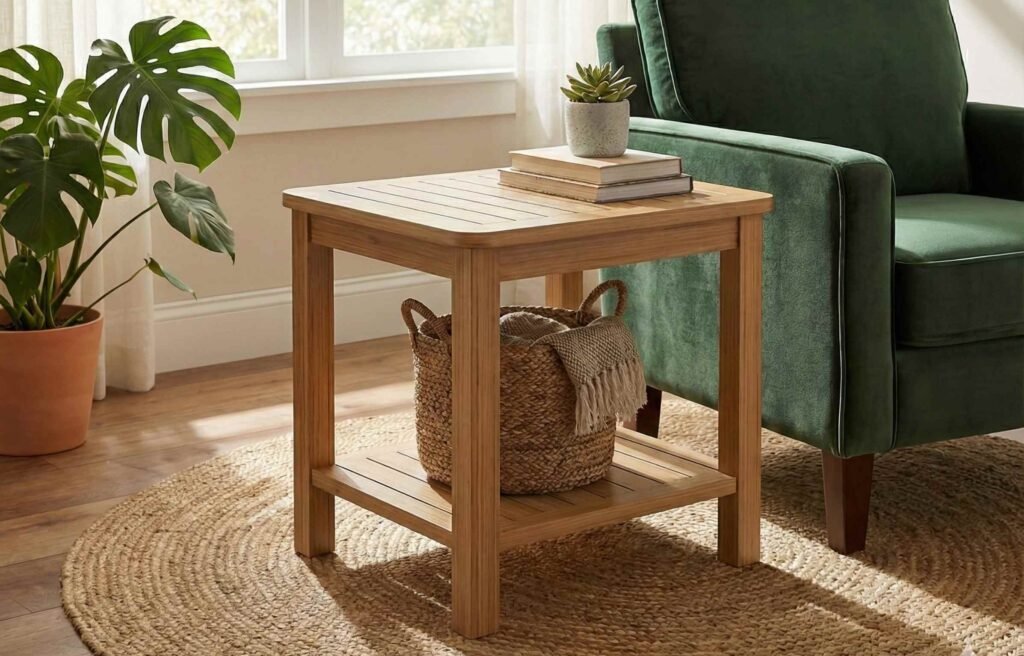
On a quiet Saturday morning in Kuala Lumpur, a homeowner named Liyana paused at an empty corner beside her sofa. The room already had its essentials, the seating, the rug, the soft lighting, yet something still felt incomplete. She later described the moment as “the instant I realised that the smallest piece of furniture could shift the entire rhythm of a room.” When she placed a compact teak side table there, the space finally settled. That small change reflects a broader truth in interior design. Side tables for living room spaces shape circulation, add texture and bring quiet structure.
Their influence may be subtle, but designers often note it as the mark of a thoughtful room.
This article looks at how these pieces support modern homes and how they add character to spaces that might otherwise feel too uniform.
Why Side Tables Matter More Than Most People Expect
Designers often note that side tables function as “quiet anchors.” They provide resting spots for books, water glasses, or lighting, but their psychological impact reaches further. Rooms without them tend to look sparse. Rooms with the wrong ones appear cluttered. But rooms with the right side tables for living room spaces gain a sense of coherence.
A 2024 study by the American Home Furnishings Alliance found that smaller accent pieces shape perceived comfort far more than larger furniture, by nearly 22%. The finding is not surprising.
People interact with these surfaces constantly. They occupy the edges of our vision. They shape the way light falls across the flooring. Some interior architects describe them as “secondary structures”, micro-architectural supports that complete the room’s geometry.
What brings character is not the table alone but its calibration, including the height next to the sofa arm, the material, the way it holds objects and even the negative space around its legs.
When all these details align, the piece enriches the room as quietly as a successful musical score enriches a film.
Related – Why Solid Teak Wood Dining Table Is 10X More Resilient
A Shift Toward Natural Materials
Natural materials have regained strong influence across Southeast Asia. Teak, rattan, suar and reclaimed woods lead the market and add warmth to contemporary rooms.
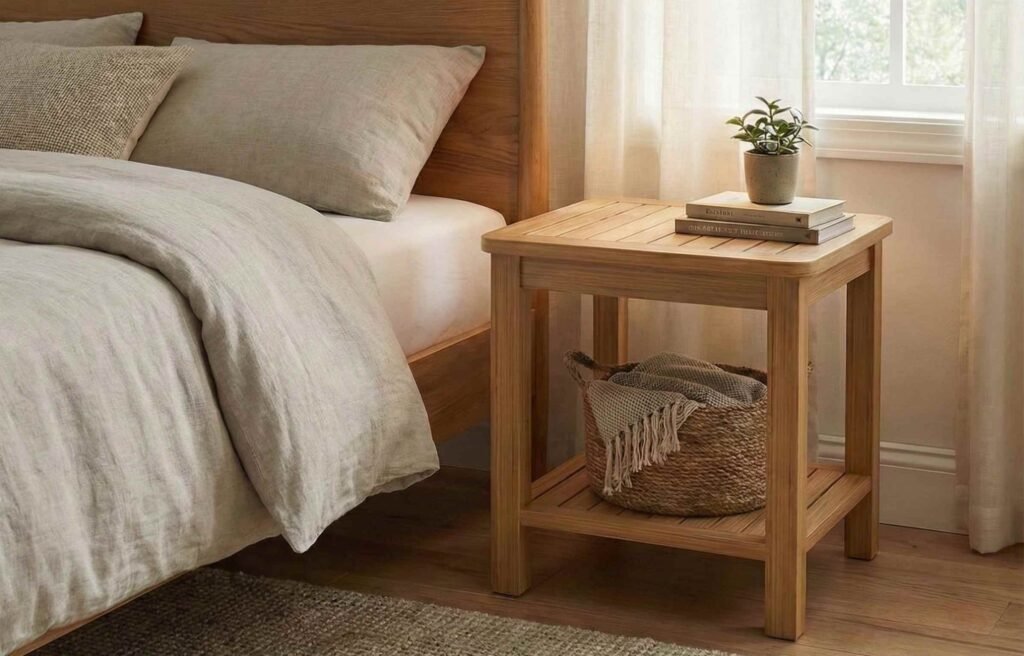
Teak is a top choice for side tables for living room spaces due to its strength, grain and longevity. Its natural oils help it age beautifully.
Rattan attracts younger homeowners who want a natural texture. Its light look softens modern rooms and suits relaxed modern living.
Stone, terrazzo and marble are rising in popularity, giving side tables a grounded feel and a presence that moves beyond function alone.
A New Appetite for Sculptural Silhouettes
Homeowners are moving beyond plain forms and choosing shapes that draw the eye. Hourglass profiles, geometric pedestals and nested sets now give side tables for living room spaces a presence closer to functional art.
Sculptural tables gathered strong interest. Curved profiles softened room edges and added movement to otherwise rectangular layouts.
Tripod base tables with slimmer legs and matte finishes are gaining traction. Their lightweight build makes rearranging easy, especially in smaller homes where the living room changes roles through the day.
The Rise of Multipurpose Designs
Urban density has pushed designers to rethink how side tables function. In many homes, the living room now shifts between work, dining and relaxation. Side tables adjust to these changes by offering storage, varied heights or surfaces that slide close to the sofa.
Some side tables for living room spaces offer small drawers or a lift for laptop use. Sliding and nested tables add flexible surfaces wherever extra space is needed.
These choices reflect the way people live. Modern homes depend on fluid spaces rather than fixed layouts. Side tables support that flexibility quietly and without demanding attention.
Also read – How Dining Room Furniture Malaysia Shapes Stylish Homes
How Color Changes the Emotional Temperature of a Room
Color brings a soft shift to the atmosphere. Larger furniture often remains neutral, leaving side tables for living room spaces to introduce subtle shifts in tone. Warm muted colors such as sand, walnut, ochre and sage remain popular because they blend well and add gentle depth.
Bold colors suit clean shapes. A cobalt blue table adds presence without overpowering the room. The tones chosen for side tables for living room spaces shape the mood.
Dark tables ground the room. Light tables brighten it. People feel the effect even without noticing it directly.
Function Meets Ritual – How People Actually Use Their Side Tables
Beyond aesthetics, these tables hold the small rituals that define home life. Morning coffee is placed on the right surface. Books stacked beside a lamp before sleep. A scented candle that diffuses across the living room in the evening.
Designers often study how residents use their homes hour by hour. These rituals reveal what form the side tables for the living room should take. Taller tables suit homes where people frequently read or work in armchairs.
Proportion – The Quiet Rule That Shapes a Room
Interior stylists often point to proportion as the element that holds a room together. A table set too high beside a sofa feels awkward, and one too low disappears. Designers keep the height near the sofa arm.
The pairing of side tables for living room layouts with lighting carries a similar weight. A lamp that dominates the table disrupts balance, while a delicate lamp on a heavy table can feel unfinished.
Pairing Side Tables With Sofas, Chairs and Accessories
Pairings set the harmony of a room. A heavy sofa works best with a lighter table, and slender chairs often need a more grounded one. Teak blends well with linen, boucle and wool, creating a calm and natural look.
Metal tables complement leather and classic shapes, while stone surfaces add contrast to soft fabrics.
A bowl, a vase or a lamp is enough to complete the table and let it stay clear and defined.
Current Trends Shaping the Market
Design habits are shifting toward pieces that feel personal and adaptable. Side tables now shape the mood and function of a living room, showing how small choices can influence the whole space.
Several developments mark the 2025 landscape for side tables for living room designs –
- Sustainability as a purchasing motive. More buyers seek certified or recycled materials.
- Smaller footprints. Compact homes favour tighter shapes and multifunctional designs.
- Textural contrast. Designers mix rattan, metal, stone and timber for layered depth.
- Rounded corners. Softer shapes are replacing sharp edges.
- Art-inspired tables. Sculptural pieces are becoming popular with younger buyers.
These shifts align with new patterns in living, remote work, simplicity and a preference for pieces with personal character.
How to Choose the Right Side Table for Your Home
Choosing side tables for the living room corners starts with understanding the need. Look at how you live in the space and what fits comfortably. Think about durable materials. Note the lighting needs. Study how the shape fits the room.
These simple steps help the table blend into the space and support the room’s character.
A good side table also respects the room’s flow. It should offer a function without crowding movement. When the scale feels right, the room settles with ease.
Recommended read – How Dining Room Furniture Malaysia Shapes Stylish Homes
The Emotional Weight of Objects
People often overlook how much meaning small objects carry. Homeowners interviewed across Malaysia and Singapore described their side tables as companions.
This closeness explains why thoughtful side tables for living room spaces feel worth the investment. They join the rhythm of the home. They hold personal objects. They sit beside conversations, celebrations and quiet evenings.
These roles are not small.
Wrapping Up!
Side tables may appear secondary to larger furniture, yet their influence reaches far deeper. They stabilise the room, guide the light, strengthen proportions and introduce texture and individuality. They hold daily rituals and small comforts that define the character of a home. A living room gains maturity when every element contributes to its personality. Side tables for living room settings offer this contribution quietly and consistently.
They enrich the room with a subtle presence that brings closeness and makes the environment feel shaped by real moments.
Side Table That Settles Comfort Into the Heart of the Room
A side table brings a soft presence into the room, shaping an atmosphere where daily life settles with ease. The piece becomes part of the home’s rhythm, offering a surface for the objects and moments that matter.
Teakia designs side tables that speak with quiet character. Each table carries the natural strength of fine craftsmanship and settles into the living space with calm authority.
Over time, the material gains depth, and the room gains a companion that feels both purposeful and personal.
CLICK HERE to view the Teakia side table for living room settings and invite thoughtful craftsmanship into the heart of your home.




