
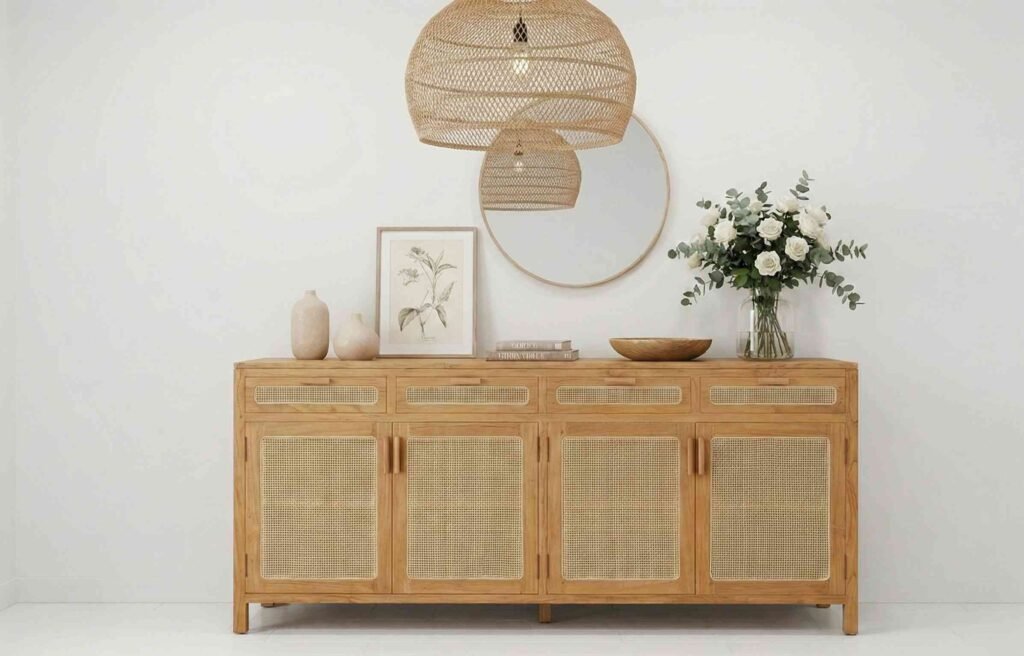
Few rooms carry as much quiet responsibility as the dining room. Daily meals take place there. Shared weekends and early mornings unfold in the same space. Long conversations continue even after plates are cleared. Yet many dining rooms struggle to balance beauty with order. Chairs slide easily into place. Tables command attention. Storage, however, tends to become an afterthought. The sideboard cabinet for dining room spaces earns its quiet authority.
It earns attention through usefulness and becomes indispensable over time. The strength lies in addressing daily routines rather than drawing attention. Clutter, access, and flow fall into place.
This emphasis on function reflects a wider shift in how homes are furnished across the region.
Malaysia’s furniture market revenue is projected to be around US$967M in 2025 (Statista), driven in part by demand for pieces that combine everyday utility with long-term value.
The Sideboard Cabinet as the Anchor of the Dining Room
Every functional room needs an anchor. In the dining room, the table often receives that role, yet the table rarely manages the room alone. A sideboard cabinet for dining room spaces introduces balance. It grounds the room visually while supporting it practically.
Plates, linens, serving pieces, and glassware gain a dedicated home that stays close to where they are used. This reduces movement during meals and hosting. It also shapes how the room feels when no one is seated. Without a sideboard, walls sit empty or fill with temporary furniture.
The sideboard creates intention. It signals that the room has a purpose beyond scheduled dinners.
Over time, the cabinet becomes the surface where daily routines meet occasional ceremony. That consistency gives the dining room its sense of order.
Related – Why Solid Teak Wood Dining Table Is 10X More Resilient
Storage That Respects Daily Use
Storage often fails when it ignores frequency. Items used daily should remain accessible. Items used occasionally should remain protected. A sideboard cabinet for dining room layouts understands this distinction. Lower cabinets shelter serving bowls and extra plates.
Drawers keep cutlery and linens within easy reach. Shelves support rotation as needs change. This structure prevents other rooms’ cabinets from absorbing dining clutter. Kitchens remain clearer. Closets stay lighter. The dining room manages its own needs.
This separation simplifies daily routines. It also reduces setup time for gatherings. Everything stays in one place.
This ease becomes invisible, which is a mark of effective design. When storage works, it disappears into habit.
Supporting the Rhythm of Hosting
Hosting rarely follows a script. Guests arrive early. Drinks move before food. Conversations stretch. The sideboard cabinet hosting becomes the quiet stage manager. It holds trays ready for service. It supports drink stations without crowding the table.
It allows hosts to step away briefly without losing control of the flow. During larger meals, the cabinet acts as a buffer zone. Food transitions smoothly from kitchen to table.
Used dishes retreat without disruption. This rhythm keeps gatherings relaxed. Guests sense ease even when effort exists behind the scenes. The sideboard supports that illusion.
It becomes associated with hospitality itself rather than storage alone.
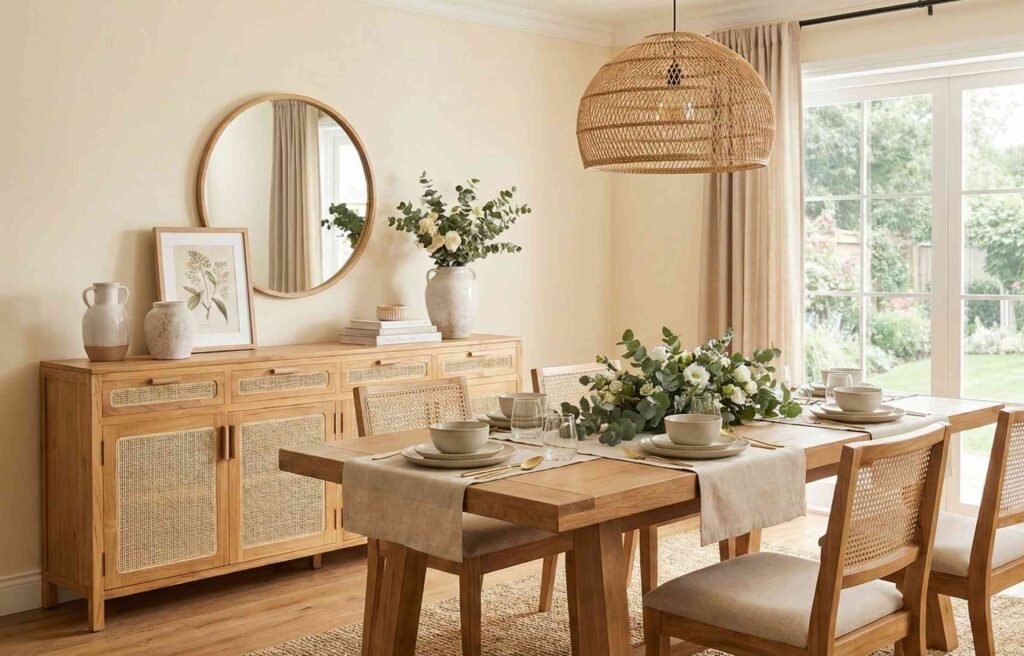
Visual Balance Along Dining Room Walls
Empty walls often feel unfinished. Overfilled walls feel heavy. A sideboard cabinet for dining room design solves both. It occupies horizontal space thoughtfully. Its height complements the table rather than competing with it. Artwork or mirrors above the cabinet gain context.
Lighting feels anchored rather than floating. This visual balance gives the room composure. Even modest dining rooms benefit. The cabinet breaks long walls into proportion. It introduces structure without crowding. When proportions align, rooms feel calmer.
That calm supports conversation. It invites longer meals. The cabinet does not dominate attention. It steadies the room quietly.
A Surface That Adapts to Changing Needs
Dining rooms shift roles throughout the day. Breakfasts move quickly. Afternoons may host work or study. Evenings slow down again. A sideboard cabinet’s flexibility offers a surface that adapts. It holds mail temporarily without becoming clutter. It supports laptops briefly without taking over the room.
It displays seasonal elements without permanence. This adaptability matters. Rooms that resist change feel fragile. Rooms that welcome change remain useful longer. The sideboard provides that welcome.
Its surface serves without demanding commitment. This adaptability extends the dining room’s relevance.
Also read – How Dining Room Furniture Malaysia Shapes Stylish Homes
Protecting the Dining Table From Overload
Dining tables attract everything. Papers and keys, bags and devices. Without intervention, the table loses its identity. A sideboard cabinet order absorbs this overflow. It offers an alternative landing space. Items shift away from the table naturally.
Meals remain distinct from daily clutter. This separation preserves the table as a shared surface rather than a storage zone. Over time, this habit shapes behavior. People clear the table instinctively. Meals feel intentional again.
The cabinet quietly enforces this boundary without rules or reminders.
Improving Circulation and Movement
Movement defines comfort. Dining rooms with poor circulation feel tense even when beautifully furnished. A sideboard cabinet plan improves flow when placed thoughtfully. It hugs the wall. It avoids blocking walkways.
It creates predictable paths around the table. This matters during gatherings when chairs move frequently. Guests navigate easily. Servers move without interruption.
Even small adjustments improve comfort. When movement feels natural, rooms feel larger. The sideboard supports this by organizing storage vertically rather than spreading it across the floor.
Longevity Through Purposeful Design
Furniture lasts longer when it serves a clear role. Its function remains constant across decades. Storage remains necessary. Surfaces remain useful.
Styles may evolve, yet the cabinet adapts. Hardware changes. Finishes refresh. The core remains relevant. This longevity reduces replacement cycles.
It also supports sustainability through continued use. Furniture that earns its place stays. Over time, the sideboard becomes familiar rather than dated.
Recommended read – Bookshelves for Living Room Corners That Shape Space
Emotional Order and Mental Ease
Clutter creates noise even when silent. Dining rooms often reflect emotional states because they host shared moments. A sideboard cabinet for dining room introduces order that extends beyond objects. When items have places, minds relax. Hosting feels lighter.
Meals slow down. Conversations deepen. This effect builds gradually. The cabinet does not promise transformation. It supports it.
That association matters. Rooms shape behavior as much as people shape rooms.
The Sideboard as a Marker of Thoughtful Living
Thoughtful homes reveal themselves quietly. They feel considered without appearing staged. A sideboard cabinet for dining room spaces signals this intention. It suggests planning without display. It shows respect for routine and gathering alike.
Visitors notice the room feels complete even if they cannot explain why. That completeness comes from a function aligning with form. The cabinet belongs because it serves. It stays because it works.
Wrap Things Up!
A dining room gains strength when it supports how people live rather than how rooms are photographed. The sideboard cabinet for dining room spaces plays a central role in that support. It organizes without controlling. It anchors without dominating. It adapts without losing purpose. Over time, its value reveals itself through ease rather than attention.
Meals feel smoother. Hosting feels calmer. The room holds together. In homes that last, the most vital pieces often speak the least.
The sideboard cabinet belongs firmly in that category.
Sideboard Cabinets That Bring Quiet Order to the Dining Room
Teakia builds sideboard cabinets with a considered approach. Each piece settles along the dining room wall without disruption and brings a sense of structure that supports daily meals and shared gatherings. The craftsmanship remains dependable through routine use and adapts naturally to how the room functions over time.
With passing years, the material softens in appearance, and the dining room develops a quiet order. The cabinet does not ask for notice, but its presence provides stability that the room comes to rely on.
CLICK HERE to view Teakia sideboard cabinets for dining room spaces and give your dining area a foundation that feels purposeful, refined, and built to last. 🍽️




