

Shoes tend to pile up faster than intentions. Sneakers kicked off in a rush. Boots still damp from the sidewalk. A pair of loafers leaned against the wall. The entryway absorbed the day first. A teak shoe rack earns its place where daily use leaves little room for failure.
Furniture placed in that narrow strip between outdoors and home rarely receives much thought, yet it faces some of the harshest daily use, moisture, grit, weight, and repetition.
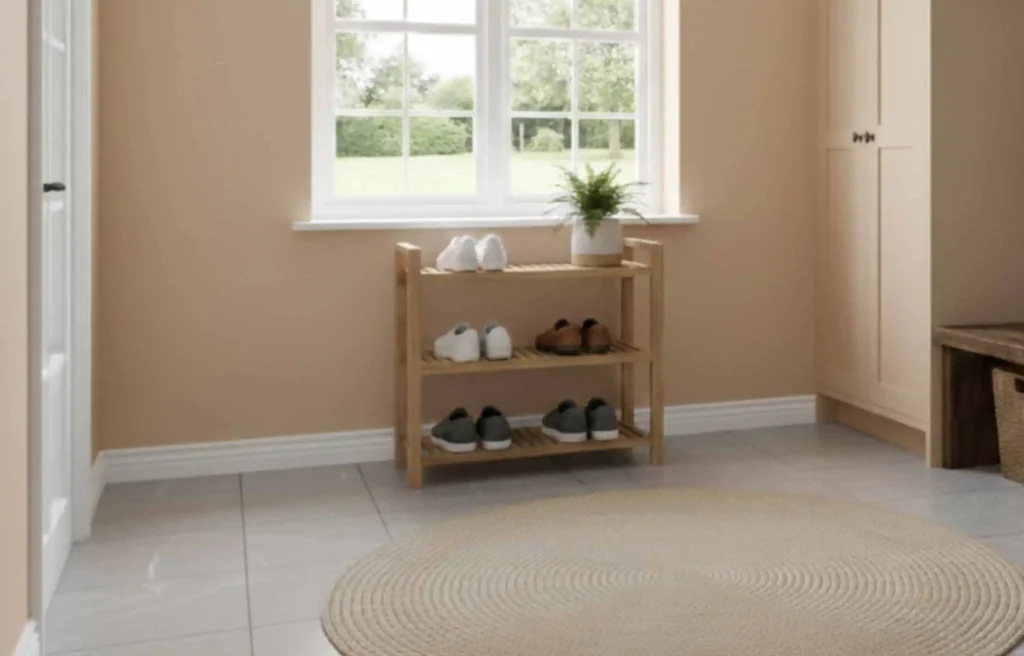
This article examines how a teak shoe rack lasts through material choice, joinery, and structure shaped by daily use.
Why Entryway Furniture Breaks First
The entryway functions as a pressure point. Shoes arrive dirty, heavy, sometimes soaked. They leave daily. Unlike a coffee table or bookshelf, the forces involved act repeatedly throughout the day, year after year.
Many shoe racks fail quietly. Shelves bow. Joints loosen. Veneers peel. Metal fasteners rust where damp soles meet coated surfaces. None of these failures appears immediately. They accumulate.
A teak shoe rack meets these demands through material choice rather than coatings. Its tight grain and inherent oils resist moisture entry. Teak adjusts at a measured pace as humidity changes, preventing stress buildup in the wood. That control keeps the frame aligned across the year.
Durability begins with understanding how people actually use entryway furniture, not how it looks in staged interiors.
Related – Teak Outdoor Furniture That Survives Extreme Heat and Sandstorms
The Role of Solid Wood in Daily Load Bearing
Not all wood furniture performs equally under repeated weight. Particleboard shelves draw strength from thin exterior layers. Engineered panels use bonded cores that weaken when exposed to damp conditions.
A solid teak shoe rack carries weight through continuous wood fibers rather than layered composites. Each shelf disperses load across the grain. When several pairs of shoes rest unevenly, the wood responds as a unit instead of fracturing at weak points.
This matters more than appearance. A shelf that feels firm today should remain firm years later. Teak’s density allows thinner profiles without sacrificing strength, which keeps the rack visually light while structurally sound.
Over time, this balance between mass and restraint determines whether furniture feels settled or strained.
Joinery That Withstands Repetition
Fasteners tell a story. Screws driven into the end grain loosen. Staples fatigue. Nails shift as wood expands and contracts.
Quality teak construction anticipates stress. Joints respond to movement. Mortise-and-tenon joinery maintains shelf stability. Dowels ease stress across wider areas. Both methods rely on friction and geometry rather than hardware alone.
In a teak shoe rack, this approach matters at every connection point. Each time shoes are added or removed, the structure experiences micro-movements. Proper joinery absorbs this energy gradually, preventing sudden failure.
Hardware contributes stability without replacing proper joinery. In areas where metal appears, corrosion-resistant alloys reduce wear caused by humidity.
Moisture Resistance Beyond Surface Finishes
Many shoe racks depend on surface coatings to protect against moisture. Once scratched or chipped, the protection fails.
Teak behaves differently. Its natural oils repel water from within the wood itself. Moisture beads rather than penetrate. This quality makes teak historically valuable in shipbuilding and outdoor applications.
Global teak wood market projected at about USD 55.7B in 2026, growing at ~8.5% CAGR through 2034 (Business Research Insights).
In an entryway context, the benefit becomes practical. Wet soles rest against shelves without immediate damage. Seasonal humidity changes register slowly. The teak shoe rack remains stable even as environmental conditions fluctuate.
This intrinsic resistance reduces reliance on heavy finishes that eventually crack or peel. The wood ages naturally, developing character rather than degradation.
Also read – Teak Furniture Malaysia – The Complete Guide to Building a Home That Lasts
Structural Balance Over Decorative Complexity
Complex designs often introduce unnecessary stress points. Thin spindles, ornate curves, and decorative cutouts weaken load-bearing surfaces.
A functional teak shoe rack prioritizes balance. Vertical supports align directly beneath shelf loads. Shelves maintain consistent thickness. Spacing accommodates footwear without forcing compression.
This restraint produces furniture that feels calm in use. Shoes slide in easily. Nothing wobbles. The rack stays grounded rather than demanding attention. Design choices that respect physics tend to age better than those chasing novelty.
Airflow as a Construction Consideration
Shoe storage involves more than weight. Air circulation matters. Enclosed cabinets trap moisture and odor, accelerating material fatigue.
Open slat construction allows airflow while keeping strength intact. Moisture dries without weakening the structure. The spacing balances ventilation with support.
A teak shoe rack built with airflow in mind stays cleaner over time. Wood dries between uses. The interior environment remains stable rather than stagnant. This consideration reflects experience rather than trend adoption.
Load Distribution Across Multiple Shelves
Daily routines rarely involve evenly placed weight. One shelf may hold heavy boots. Another carries lighter shoes. A third remains empty.
Quality construction anticipates imbalance. Cross supports align with expected load zones. Shelf spans remain short enough to prevent sagging. Vertical uprights transfer weight directly to the floor.
In a durable teak shoe rack, these decisions appear invisible. The rack feels the same regardless of how the shoes are arranged. That consistency builds trust through use rather than promise.
Surface Texture and Everyday Contact
Furniture in high-contact areas must tolerate abrasion. Soles scrape. Heels drag. Dirt grinds against surfaces.
Teak’s dense grain resists surface wear better than softer woods. Light marks settle into the material instead of breaking it. Over time, the surface gains a patina shaped by use.
This aging process matters. A teak shoe rack should look better through familiarity, not worse through exposure. The wood records daily life without becoming fragile.
Stability at the Floor Connection
Many failures begin where furniture meets the ground. Uneven floors, shifting weight, and repeated movement loosen legs and joints.
A well-constructed teak shoe rack uses wide feet or continuous bases that distribute pressure evenly. Contact points remain stable even on imperfect flooring. The rack stays level without constant adjustment.
This stability prevents stress traveling upward through the structure. When the base remains secure, shelves and joints last longer.
Maintenance That Respects Time
Furniture that requires constant care rarely survives busy households. Teak reduces maintenance demands by design.
Occasional cleaning removes grit. Periodic oiling refreshes surface tone if desired, though it remains optional. The wood tolerates neglect without penalty.
This resilience aligns with daily routines rather than idealized maintenance schedules. A teak shoe rack accommodates life rather than demanding accommodation.
Recommended read – Why a Sideboard Cabinet for Dining Room Spaces Is a Vital
Construction That Serves the Long View
Longevity rarely announces itself at purchase. It reveals itself quietly over the years of use.
The value of a teak shoe rack rests in cumulative stability. Shelves that remain straight. Joints that stay tight. Surfaces that mature rather than deteriorate.
In an era of disposable furnishings, construction choices rooted in material understanding stand apart. They trade speed for certainty. They prioritize endurance over spectacle. A shoe rack seems modest. Daily pressure adds up. Teak absorbs the work.
What endures in the entryway often reflects what endures elsewhere. Furniture that accepts wear as part of its purpose tends to outlast both trends and replacements.
Bring It All Together!
Daily routines demand furniture that holds up without effort. Shoes arrive wet, heavy, and in a hurry. A teak shoe rack meets this reality through dense grain, solid joinery, and natural oils that resist wear without coatings. Its strength shows in what does not happen. Shelves stay straight. Joints stay firm. Maintenance stays minimal. Durability becomes a quiet constant, supporting daily life day after day.
Built to Hold Daily Entryway Use
Teakia designs each teak shoe rack with restraint and intention. Every piece settles naturally into the entryway without visual noise, supported by solid teak construction that remains steady through daily wear, shifting humidity, and repeated use.
Over time, the surface softens, and character deepens. Shelves stay aligned. Joints remain firm. The rack becomes familiar, supporting routines without drawing attention to itself. Care stays minimal, yet reliability increases with each passing year.
View the Teakia collection to choose a teak shoe rack built to withstand everyday use. 👞




