
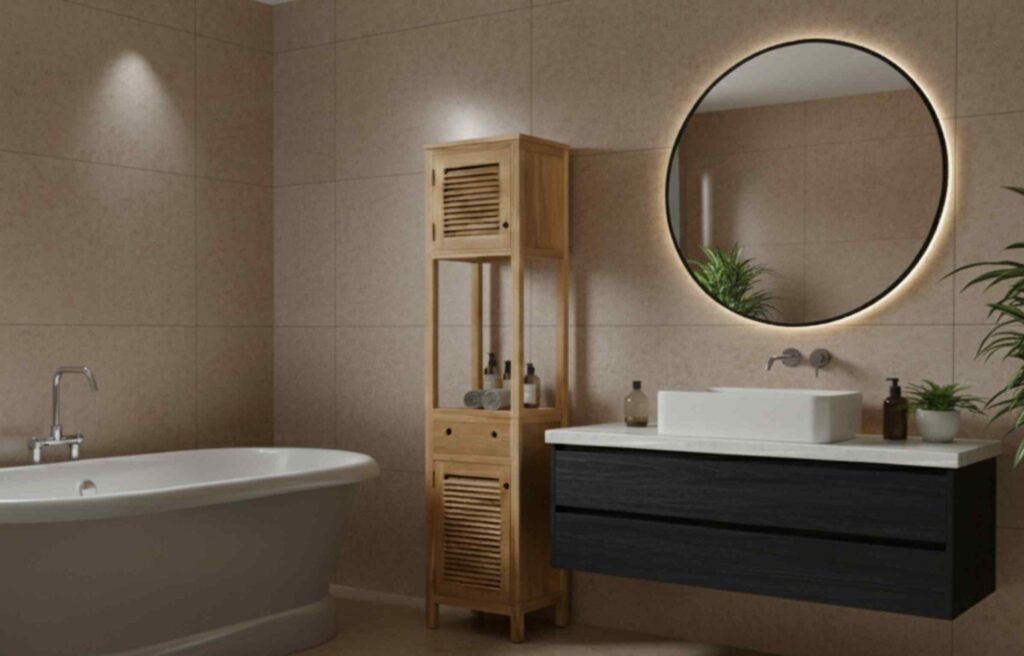
Soft daylight reaches the vanity through a muted window, easing into the wood. There is no glare, only grain and quiet depth. Grain lines carry the memory of time, and the bathroom settles into a quieter mood. This change continues to unfold across modern homes. Bathrooms once prioritized efficiency above all else. Over the past decade, they entered the design mainstream. Teak bathroom furniture reflects this shift, influencing how these spaces feel and endure.
The shift reflects durability and material integrity, not passing fashion, as homeowners favor spaces that feel steady instead of polished.
From Cold Surfaces to Living Materials
Bathroom design once leaned toward perfection on the surface. Glossy laminates, polished metal, and synthetic finishes filled showrooms. In daily use, those materials struggled with steam, heat, and wear.
Teak tells a different story. It brings a natural material into a room long dominated by hard surfaces. Teak adds warmth and texture while continuing to perform reliably under constant moisture.
Designers increasingly choose bathroom furniture to counterbalance hard architectural lines. The result feels intentional rather than ornamental. The bathroom moves from presentation to presence.
Related – Side Tables for Living Room That Bring Character Into Your Space
Why Teak Performs Where Other Woods Fail
Teak has a long history outside the home. Shipbuilders relied on it for centuries because saltwater, humidity, and sun exposure could not easily compromise its structure. That same resilience explains its growing presence in bathrooms.
Natural oils within teak create a barrier to water, while dense grain structure helps maintain stability as conditions change. In environments where steam and splashes occur daily, this matters.
Dimensional stability also plays a role. Teak is often listed with relatively moderate shrinkage values (about 2.6% radial and 5.3% tangential from green to oven-dry), which helps reduce the odds of warping and seam stress in humid rooms (Woodassistant).
Cheaper woods require heavy chemical sealing to survive similar conditions. Teak relies on its own structure. That distinction shapes longevity and maintenance expectations.
For most households, basic care preserves bathroom furniture, with no need for complicated upkeep schedules.

Teak Bathroom Furniture and the Shift Toward Purposeful Design
Design language in modern homes has become quieter. Visual clutter carries less appeal. Clean lines, honest materials, and functional layouts define contemporary bathrooms. Bathroom furniture fits naturally into this shift.
Vanities built from teak emphasize proportion and balance rather than decoration. Cabinets hide storage without dominating the room. Shelving feels architectural rather than temporary. Natural variation in the grain gives the space depth and balance.
This approach aligns with a broader design philosophy: furniture should support daily routines without drawing focus away from them. Teak accomplishes this through restraint. It does not demand attention. It earns it gradually.
Aging Gracefully Instead of Wearing Out
One reason bathroom furniture redefines expectations lies in how it ages. Many bathroom materials aim to preserve a factory-fresh look indefinitely. When they fail, the failure feels abrupt. Chipped laminates and peeling finishes announce decline immediately.
Teak behaves differently. Exposure deepens its color. Grain patterns become more pronounced. Minor marks blend into the surface rather than standing apart. Over time, the furniture records use without appearing worn.
Materials that record time without degrading appeal to those focused on long-term ownership. This mindset has grown alongside sustainability-driven design.
Also read – Lounge Chair Malaysia Inspiration for Contemporary Living Spaces
Moisture, Mold, and the Practical Advantage
Moisture and heat fluctuations test every surface in a bathroom. Teak responds with built-in resistance, limiting dependence on synthetic sealants.
Well-constructed teak bathroom furniture allows air circulation around drawers and panels, further limiting moisture retention. This combination of material property and thoughtful design improves hygiene outcomes over time.
Families focused on durability and reduced maintenance often turn to teak as a material that supports everyday wellness standards.
Teak Bathroom Furniture in Spa-Inspired Interiors
Spa-driven interiors have moved bathroom material choices away from decoration and toward natural texture. Low lighting, textured surfaces, and open layouts now guide many design plans.
Bathroom furniture grounds the space through natural texture and measured warmth.
Unlike colder finishes such as tile or stone, teak maintains a more consistent surface temperature. The wood feels comfortable to the touch, a detail that becomes noticeable during early hours and quiet evenings. That tactile quality subtly shapes how the space is experienced.
Teak frequently sets the visual direction, supported by muted tiles, restrained fixtures, and a limited palette that keeps the space balanced. Calm comes from proportion rather than decoration.
Sustainability and Responsible Material Choices
Decisions around materials increasingly weigh provenance alongside durability. Responsibly sourced teak supports a renewable approach to long-term use.
Teak furniture built to a high standard often outperforms disposable alternatives, supporting longer use cycles and less waste. This lifecycle perspective resonates with buyers seeking meaningful sustainability rather than surface-level claims.
When paired with transparent sourcing and skilled craftsmanship, teak aligns environmental responsibility with design integrity.
Craftsmanship Matters More Than Trends
Performance outcomes are closely tied to construction standards. Proper joinery and solid wood components handle humidity far better than veneered alternatives.
Manufacturers that focus on teak furniture designed for wet spaces understand these details. Design teams prioritize structural integrity alongside visual balance, ensuring each piece performs reliably in everyday bathrooms rather than controlled display settings.
This level of craftsmanship separates enduring furniture from pieces made to satisfy short-lived design cycles.
Recommended read – Living Room Furniture Malaysia That Brings Warmth to Modern Interiors
A Material That Redefines Expectations
Teak bathroom furniture reframes modern bathrooms by replacing surface polish with material depth and long-term performance.
As homeowners continue to view bathrooms as personal sanctuaries rather than utility zones, material choices carry greater weight. Teak meets this moment not through novelty, but through proven performance and quiet elegance.
The redefinition underway remains subtle. It happens when drawers glide smoothly after years of use. When surfaces feel familiar rather than fragile. When a bathroom ages with its occupants instead of against them.
In that sense, teak bathroom furniture does not follow modern bathroom design. It shapes it.
Bring It All Together!
Bathroom design continues to move toward authenticity rather than perfection. Teak bathroom furniture meets that expectation by tolerating steam, softening rigid layouts, and improving visually over time. For homeowners, the appeal comes down to a simple promise: fewer replacements, less visible wear, and a bathroom that feels intentionally designed every day, not only the week it gets renovated.
When crafted well and sourced responsibly, teak becomes a long-term choice that quietly raises the standard for what a “modern” bathroom can be.
Teak Bathroom Furniture That Brings Lasting Calm to Modern Spaces
Teakia builds teak bathroom furniture with a considered approach. Each piece sits comfortably within the bathroom layout, supporting daily routines without visual noise. The construction holds steady through humidity and frequent use, while the natural grain introduces warmth that tile and stone alone cannot provide.
The surface deepens in character, and the bathroom settles into a sense of balance. Storage feels intentional. The space feels composed. It asks for little attention, yet its role in the room grows more important with use.
CLICK HERE to view the Morris teak bathroom unit and give your bathroom a foundation that feels grounded, refined, and built for years of everyday use. 🛁


