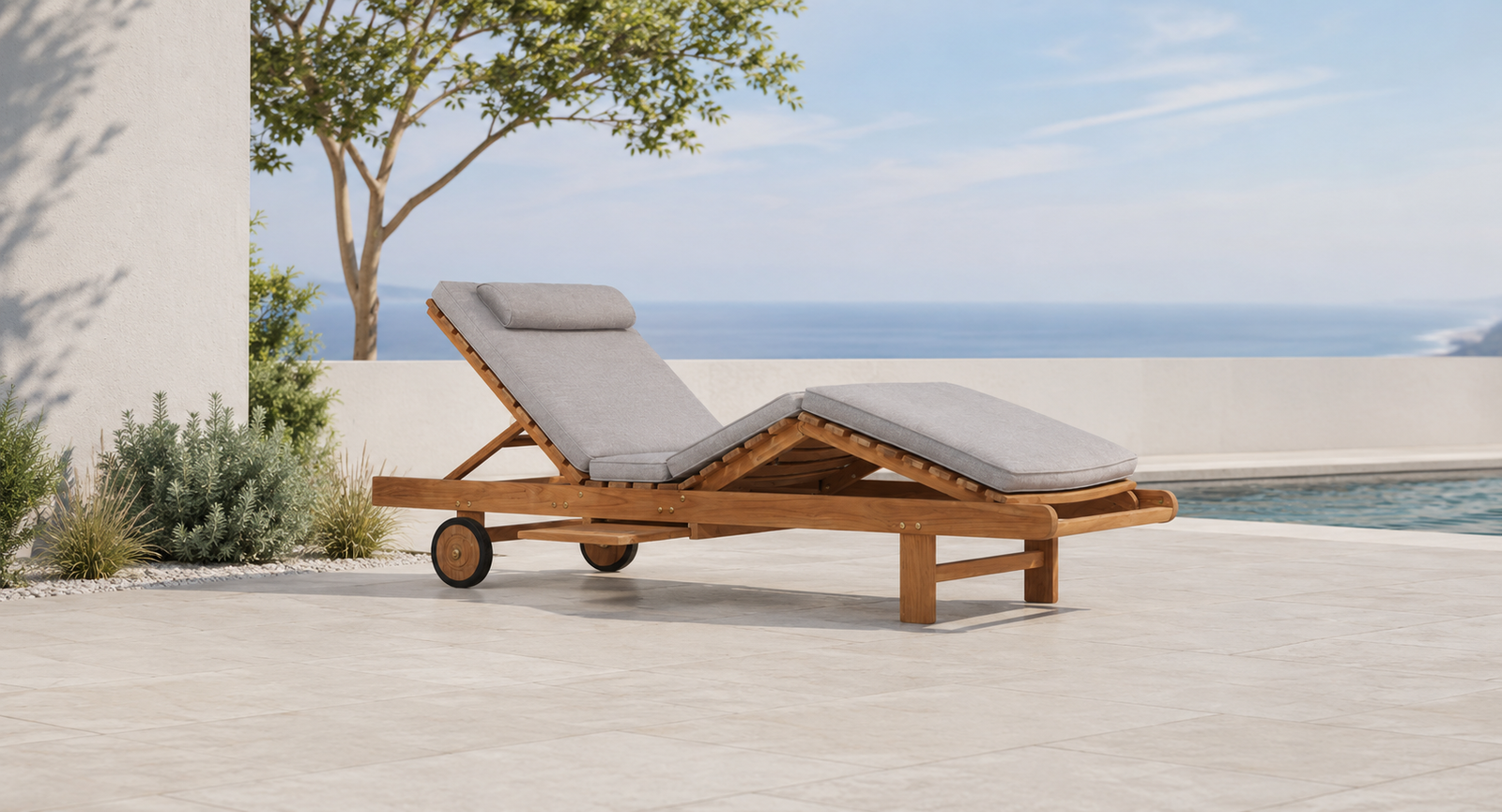

If you are buying garden furniture in Malaysia, here is the honest summary from more than 20 years in the trade: solid teak survives our heat, humidity and monsoon rain better than anything else, needs only minor upkeep, and lasts for decades. If you would rather have zero maintenance, high-quality outdoor wicker (VIRO or REHAU), powder-coated aluminium or stainless steel, and sintered stone tops are the alternatives worth looking at. Expect to pay from around RM8,500 for a quality teak six-seater dining set, RM1,600 for a bench, and RM10,000 for a lounge set — more than a marketplace listing, but far less per year once you stop replacing cheap furniture every two seasons. Buy in person if you can, so you can feel the weight and see the joinery for yourself.
Malaysia is not an easy place for garden furniture. The heat, the humidity, and the afternoon rain that arrives without warning all take a toll. Most furniture sold as “outdoor” in other parts of the world would not last two years here before looking completely beaten. This guide is the honest conversation I wish someone had given me before I started — what actually holds up in a Malaysian garden, what it costs, how to care for it, and when teak is not the answer at all.

Why is Malaysia’s climate so hard on garden furniture?
Because we are dealing with conditions most furniture was never designed for. We sit around 32–34°C for much of the year, humidity rarely drops below 75%, and the UV exposure is genuinely intense. It does not just fade colour — it breaks materials down structurally over time. Foam hardens and collapses. Metal corrodes faster than you would expect. Synthetics that pass quality tests in a European factory can crack within months under a Malaysian afternoon sun. A garden is the harshest test of all, because unlike a covered patio or a condo balcony, it is fully exposed with nowhere to hide from sun or rain.
The lesson I settled on early and never went back on: only choose what is genuinely built for a tropical climate. Not “weatherproof” by a Western standard, but furniture designed for heat and humidity from the very beginning. Teak is the clearest example of that.
Why is teak the best wood for garden furniture in Malaysia?
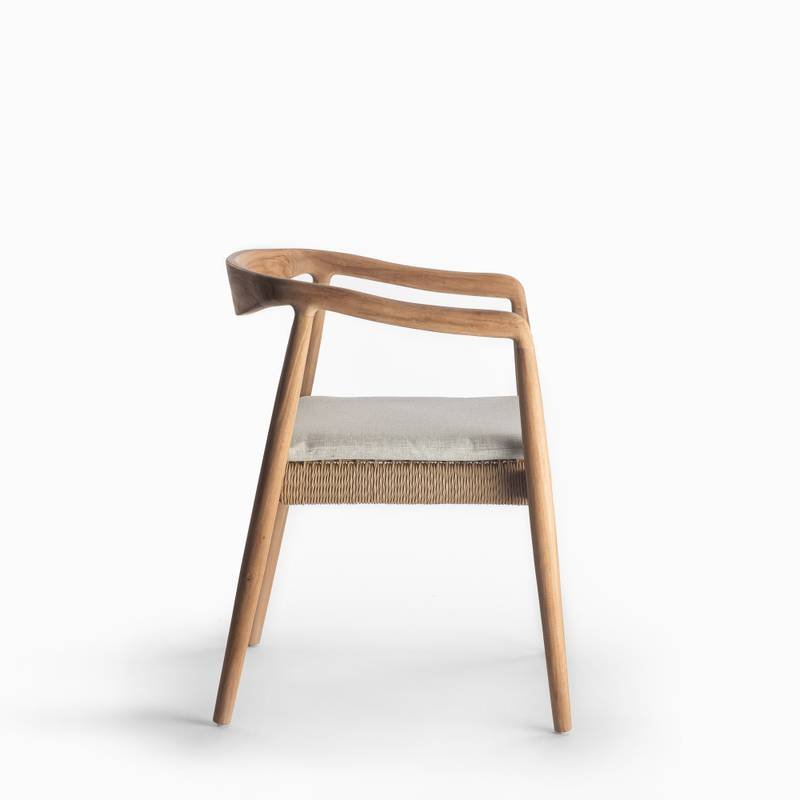
Because it was made for this kind of climate. Teak carries natural oils in its grain that repel moisture, resist insects, and stop it warping the way other hardwoods do. You can leave it out through every monsoon season and it holds its shape. Customers who buy a solid teak dining set and come back five or six years later are always glad they did not compromise.
It also ages in a way people come to love. Fresh teak has that warm golden-brown colour. Left outside untreated, it slowly turns a silver-grey — and some customers actually prefer it that way. Either is fine. Teak does not need to be treated to survive outdoors here, and that is the whole point of it.
“When a customer asks me what to buy if they only want to buy once — teak is always the answer. Every single time.”
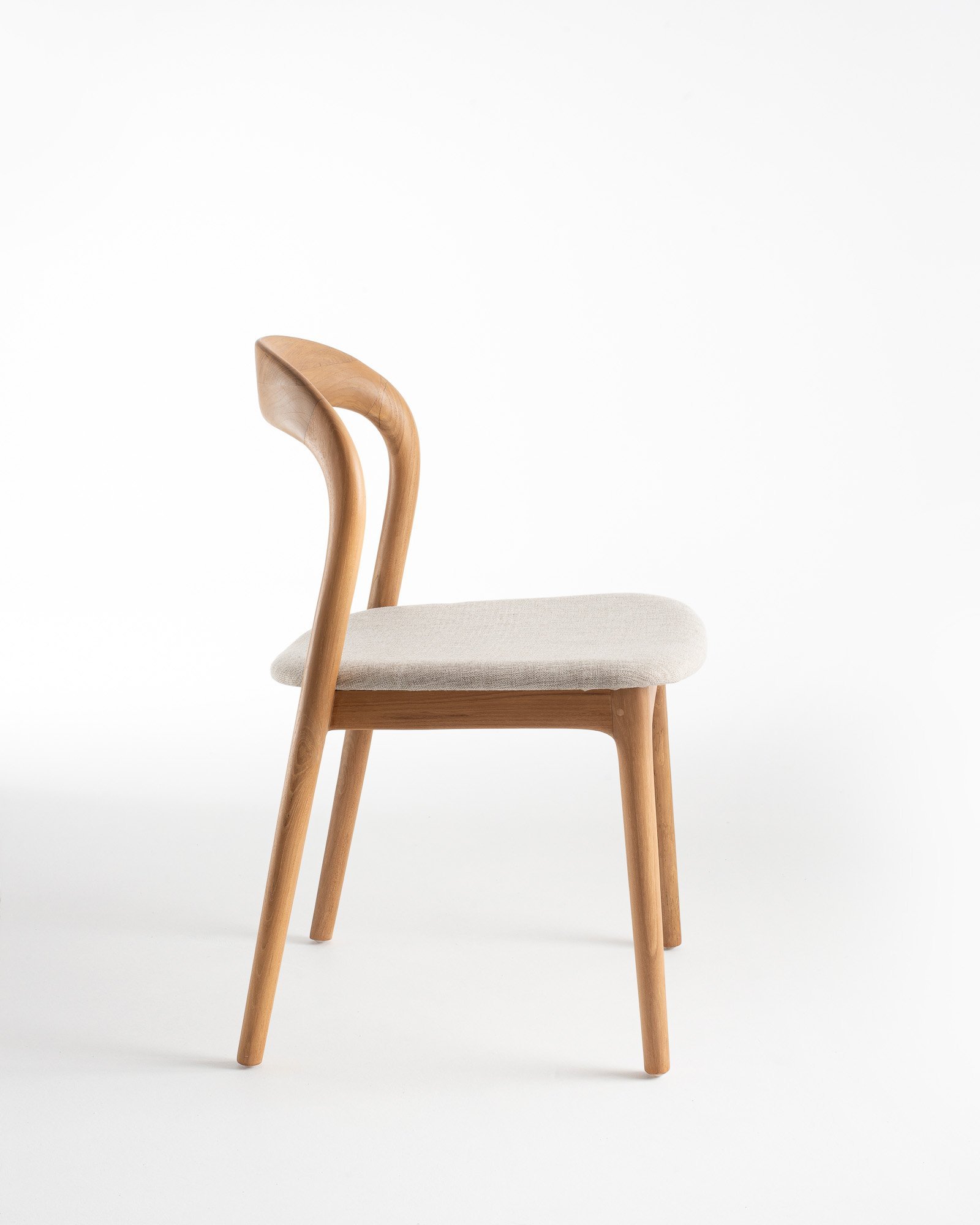
Which teak material combinations work best for a Malaysian garden?
Teak on its own is excellent, but two combinations are worth knowing about because they cover most gardens beautifully.
Teak with powder-coated aluminium
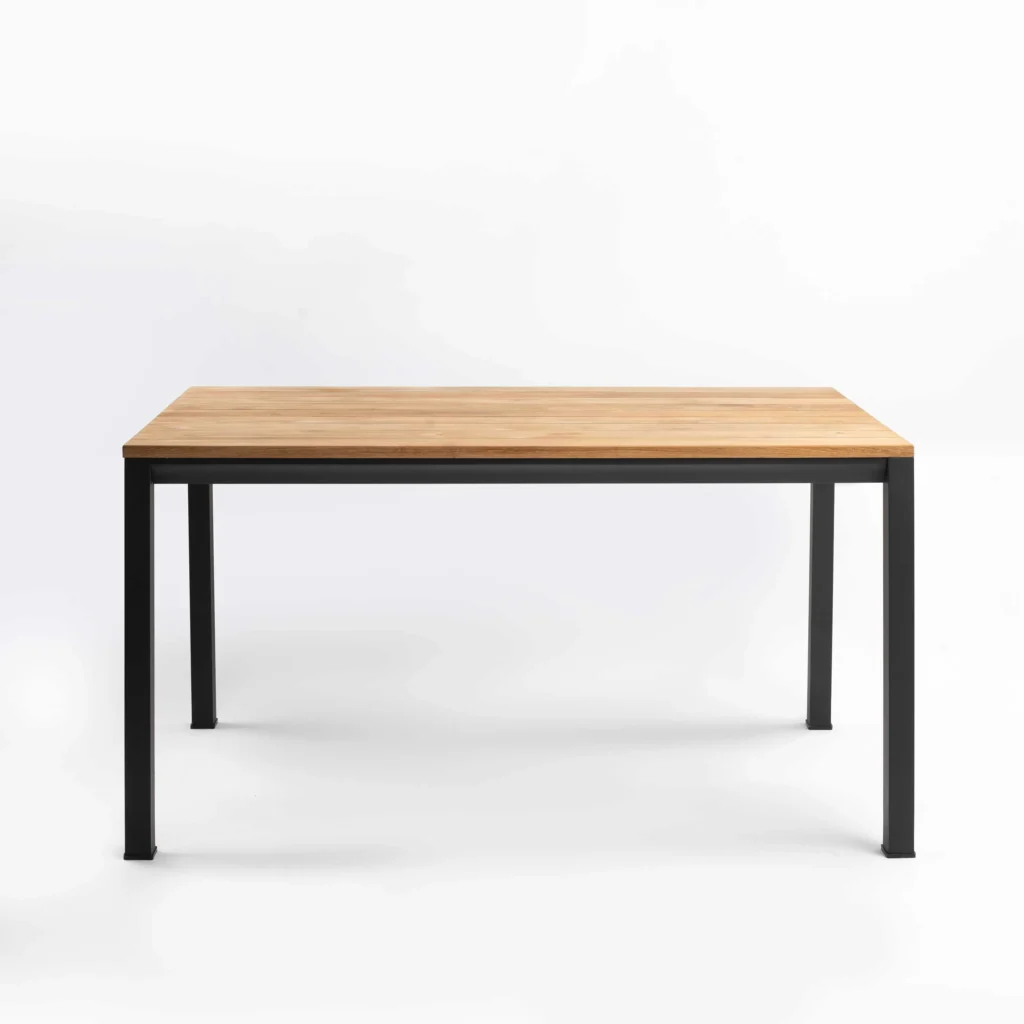
This is one of my favourites for garden dining. The teak top gives you warmth, natural beauty and proven tropical durability; the powder-coated aluminium frame keeps the weight down and — when the coating is done properly — holds up very well to humidity and rain. The key word is “properly.” Cheaper versions cut corners with thin coating, poor adhesion, or average-grade aluminium, and that is where corrosion starts at the joints within a year or two. A heavy-gauge frame with a finish that bonds correctly makes a real difference over time. For a long table that seats six or eight, teak and aluminium is one of the best combinations going.
Teak with marine-grade stainless steel
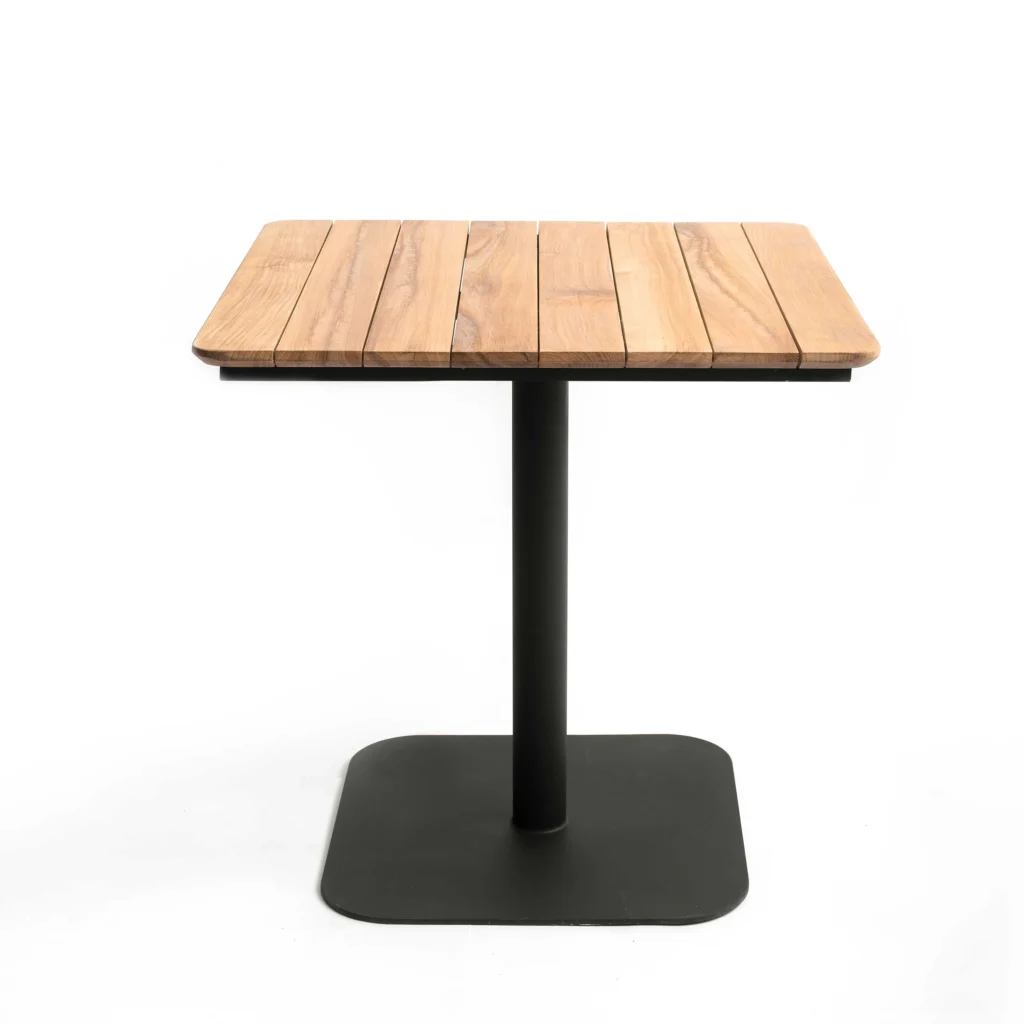
This is the premium end. Where aluminium is light and practical, stainless steel is solid and looks serious — it suits lounge pieces especially, the chairs, coffee tables and side tables where you want something that looks properly designed. One thing to know: not all stainless is equal. Grade 316 marine-grade is what you want, because it handles our coastal humidity and salt air far better than the cheaper 304 grade. Matched properly with teak, it is one of the most durable combinations you can buy — the metal does not rust, the wood does not warp, and the whole piece simply keeps sitting there looking exactly as it should.
When is teak not the right choice?
Here is the honest dividing line, and it comes down to one thing: how much maintenance you actually want to do. If you accept that teak is a natural material that will change over time and needs a little care — even if minor — teak is your material. But some people genuinely do not want to think about it at all. They want to put furniture outside and forget it exists. If that is you, I would steer you away from teak, and point you to three alternatives that suit “buy and forget” far better. We stock all three.
1. High-quality outdoor wicker
This is as close to zero-effort as garden furniture gets. Leave it in the sun or the rain — it genuinely does not matter, nothing happens to it. The one thing that matters is material grade. Cheap wicker is a trap; it goes brittle and cracks. We use VIRO or REHAU, which are premium, best-in-class synthetic weaves. With those, wicker is a true buy-and-forget option.
2. Powder-coated aluminium or stainless steel
These materials are not fazed by the outdoors — they are meant to be out there. They shrug off rain and humidity, and you get to play with the different powder-coat colours available, which gives you more freedom on the look than wood does.
3. Sintered stone tops
For the tops of dining tables, coffee tables and side tables, sintered stone is one of the better options going. It lasts a long time, it is easy to clean, and it is genuinely durable against heavy wear and tear. Paired with a weatherproof frame, it makes a table that needs almost nothing from you.
How should I choose garden furniture for my space?
Start with outdoor dining
If the space is large and you want to fill it properly, I always start with a dining set. Dinners outside in the late evening are a completely different experience — a whole new vibe you do not get indoors. It is the piece that changes how you actually use a garden, so it is the one to get right first.
Add lounge seating for how you’ll really use it
After dining, choose lounge seating around what you will actually do in the space. A proper conversational set if you entertain. A single comfortable spot if you are the occasional reader. Something you can stretch out on if what you really want is an afternoon nap. Matching the seating to the use is what makes the garden feel like yours rather than a showroom.
Invest in covers if the garden is fully exposed
If your garden is completely uncovered, I would put some budget into furniture covers. They cut your maintenance down noticeably and protect the sets over the long term. It is a small spend that pays for itself in how much longer everything keeps looking new.
What does garden furniture cost in Malaysia?
Here is an honest ballpark for genuine, built-to-last teak — the quality I would put my name on. These are starting figures; the price rises with size and specification.
These sit well above a marketplace listing, and that gap is exactly where the confusion lives. A customer sees a teak-look dining set online for RM900 and mine from RM8,500, and in a photo they look similar. What they cannot see is the grade of the wood, the quality of the frame, whether the coating survives two monsoon seasons, or how the joints are put together. Some buy the cheap one, it deteriorates fast, and they conclude outdoor furniture in Malaysia just does not last. The honest way to weigh price is cost per year: a quality set that lasts a decade is usually cheaper annually than replacing a cheap one every two or three years.
“When customers compare my prices to a marketplace, they are usually comparing two completely different products — they just cannot see it yet.”
How do I spot real teak?
You do not need to be an expert — you need three simple checks you can do standing in front of the furniture. First, try to lift it. Teak is very dense and therefore heavy; a real teak set is not something the wind will push around. Second, read the grain — genuine teak grain tells the story of the years the tree took to grow, and it is hard to fake convincingly. Third, look closely at the joinery, because the technique used to put a piece together is where quality shows itself. Once you know to look, it is very difficult to confuse a quality table with a poor one.
“Teak will stand out. It does not need validation.”
How do I care for teak garden furniture?
Less than you would think — and how much you do is really a matter of taste, not survival. Teak will last outdoors whether you maintain the colour or not. The care depends on which look you want and how exposed the set is.
If you like the silver-grey, you barely do anything
If you are happy to let teak weather to its natural silver-grey, maintenance is basically a wash. You can skip the sanding and oiling entirely — that part is purely cosmetic. The wood is just as strong either way.
If you want to keep it golden, make it a Sunday project
For a fully exposed set you want to keep golden, about twice a year is enough: give it a good wash and clean with a sponge, let it dry, then a light sanding to take off the patina and reveal the golden-brown, followed by a light wood oil for protection. It is a satisfying way to spend a Sunday afternoon. For covered or semi-covered sets, this is needed far less — once every couple of years is plenty.
What not to do
Two mistakes I see often. Pressure-washing can damage the wood if it is done improperly, so go gentle. And if you do not like the grey, please do not paint or stain it dark — it looks great at first, but the paint eventually peels, and the next round of maintenance becomes a long, tedious strip-and-redo. You are free to do as you please with your own furniture; these are simply the suggestions I would give you.
What about delivery, deposit and warranty?
We provide a full delivery service throughout Malaysia — our team loads, unloads, unpacks and installs the pieces in place, so you are not left with flat-packs and an Allen key. Payment is straightforward: a 50% deposit to confirm, and the balance at the time of delivery. Every piece we sell carries a five-year warranty, with the full policy on our website. For items in stock, we can often do same-day or next-day delivery around the Klang Valley. For out-of-stock or made-to-order pieces, allow 6–8 weeks — that wait is simply the sign of furniture being built to order rather than stacked in a warehouse.
Is it worth visiting the showroom?
For a purchase like this, yes — and most of our sales are finalised in person for good reason. Coming in lets you see the quality for yourself, so you know exactly what you are going to receive, and it is simply easier to work everything out face to face. Our showroom is in Hicom-Glenmarie, Shah Alam, open seven days a week, 10am–7pm. No appointment is needed — you are welcome to walk in. A quick heads-up 10 or 15 minutes before you set off is appreciated so our staff know you are on the way, but it is not mandatory.
Garden furniture in Malaysia: frequently asked questions
Can I leave garden furniture outside year-round in Malaysia?
Yes, if it is solid teak or a genuine weatherproof material like high-grade wicker, aluminium or stainless steel. Teak in particular holds its shape through every monsoon season. Cheap or untreated materials are what fail — swelling, warping and rusting after a season or two.
Does teak garden furniture need oiling or treating?
Not for survival. If you like the natural silver-grey, a simple wash is all it needs. Only if you want to keep the golden colour do you sand and oil it lightly, about twice a year for a fully exposed set.
How much does a teak garden set cost in Malaysia?
As a guide, a quality teak six-seater dining set starts from around RM8,500, a 150cm bench from around RM1,600, and a five-seater lounge set with coffee table from around RM10,000. Prices rise with size and specification.
How do I know if it is real teak?
Check three things in person: the weight (teak is dense and heavy), the grain (genuine teak grain is distinctive and hard to fake), and the joinery (quality construction is obvious once you look). If you cannot inspect it yourself, buy from a seller who can show you their wood sourcing.
Is the item in stock, and how fast can I get it?
Stock varies by piece. In-stock items can often be delivered same-day or next-day around the Klang Valley, while out-of-stock or made-to-order pieces take about 6–8 weeks. The quickest way to check a specific item is to message us directly.
What if I want zero maintenance instead of teak?
Then look at high-quality outdoor wicker (VIRO or REHAU), powder-coated aluminium or stainless steel, or sintered stone tops. All are genuine buy-and-forget options that survive Malaysia’s climate with almost no upkeep.
The bottom line
When it comes to garden furniture in Malaysia, no wood compares to teak. It is the end game. We have seen it come through it all — gardens, patios, balconies, poolsides — and it thrives, for a very long time. If you are looking for something of very high quality that will last you years and that you will genuinely enjoy, the answer is teak. That is why we have built our entire teak garden furniture range in Malaysia around it.
Visit our showroom in Hicom-Glenmarie, Shah Alam — open daily 10am–7pm, walk-ins welcome. Feel the weight, look at the joinery, and see exactly what you are buying. Prefer to ask first? Message or call us and we will help you find the right set.
Written from direct experience supplying teak garden furniture across Malaysia for over 20 years.